Welcome

" Welcome to the florafaunauk site , hope you enjoy the pictures and posts giving a detailed insight into the Natural History of our Country throughout the seasons and year "All that the Sun Shines on is beautiful, so long as it is Wild" John Muir "


Monday, 28 May 2018

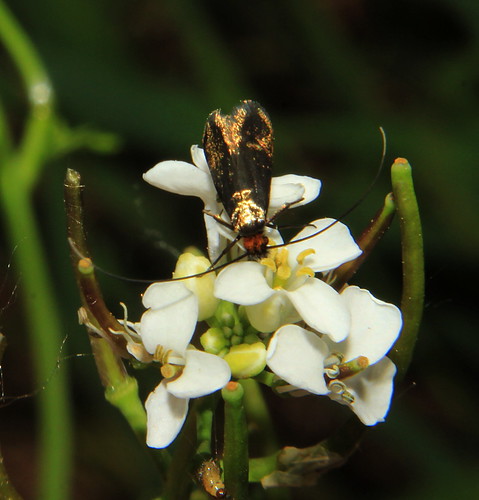
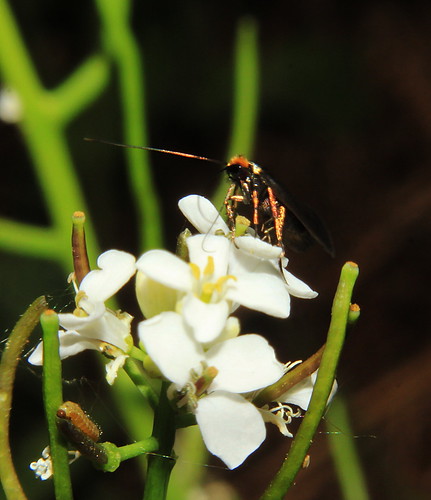
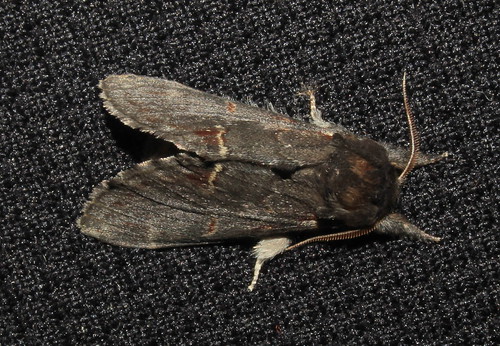
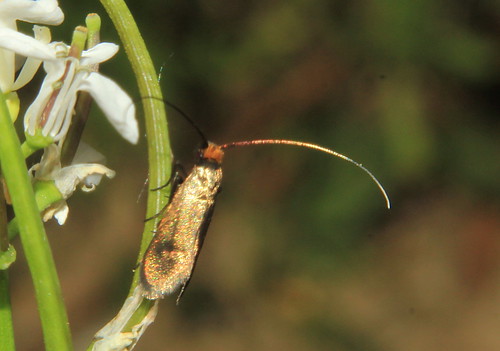
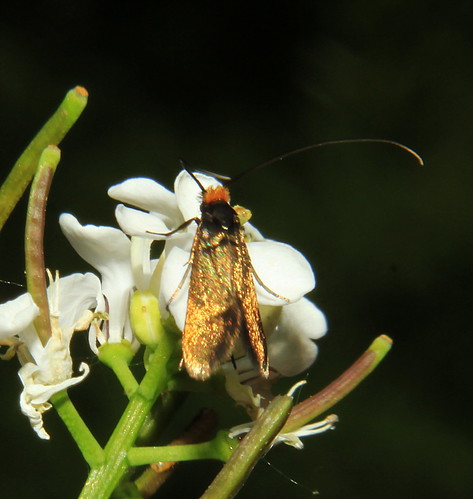
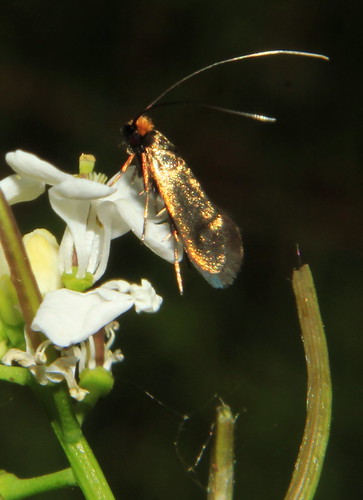
0152 Cauchas rufimitrella ABH 7.010

Sun 27th May 2018

This small micro a Longhorn with rufous head was found nectarring on Garlic Mustard by the Calder . The larvae feed within the seed pods .

It shouldnt be confused with the smaller Micropterix calthella ( also with a red head but shorter antennae  ) usually found on buttercup which has mouth parts capable of taking pollen


IMG_3243xx

IMG_3238xx

IMG_3233xx

IMG_3230xx

IMG_3220xx

Sunday, 1 October 2017

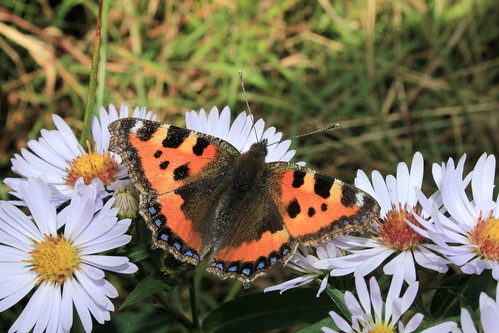
Small Tortoiseshell

A brief trip to Black Toft Sands confirms the Small Tortoiseshell still flying throughout Britain in the autumnal sunshine . ( Taken RSPB Gypsy Marsh) An ideal wetland and grassland habitat on Aster


  IMG_2305xx


IMG_2352xx

Sunday, 2 July 2017

Swans in The Moss

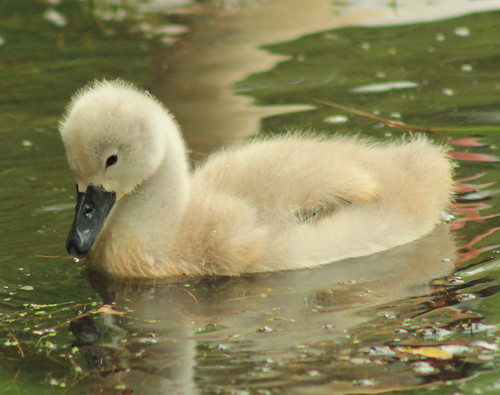
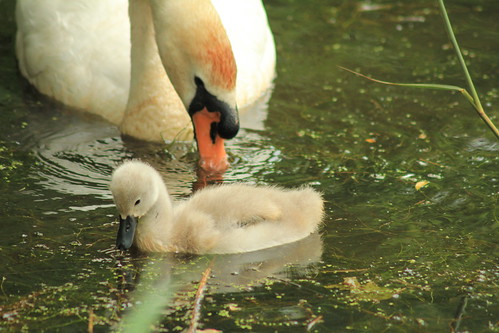
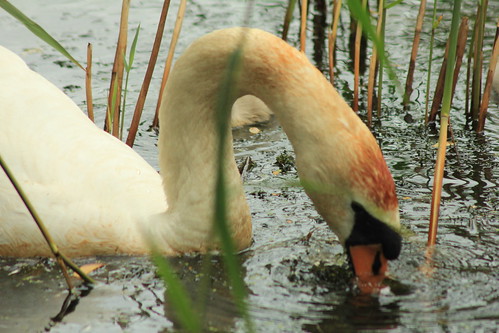
Mute Swans - Cygnus olor and Cygnets in breeding Plumage amongst Reeds in Leighton Moss . Adults with red tinged breeding plumage and Cygnets still in down


IMG_1192xx


The male and the female birds, the cob and pen, usually attempt to mate for life,  It is possible for an adult bird to find another mate.if a partner is lost


IMG_1204

The nest is a large mound of material, normally dried grasses and assorted vegetation, sticks and rushes, constructed at the water's edge. The nest is built by the female, while the male supplies the materials.

The female lays up to seven eggs between late April and early May. Both sexes incubate the eggs, which hatch after 35-41 days. The young birds, or cygnets, sometimes ride on their parents' backs and remain with the adult birds for four or five months.

The young of some pairs are driven off the breeding territory as soon as their plumage is predominantly white (during late autumn or winter). Other broods often accompany their parents to the wintering area, and usually join a large flock in which they remain when the parents return to their breeding territory. Young birds will not generally breed for the first two years of adult life.


IMG_1184

Friday, 23 June 2017

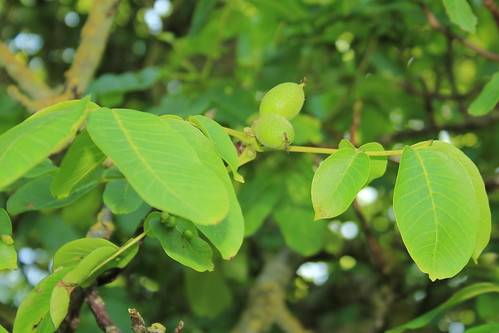
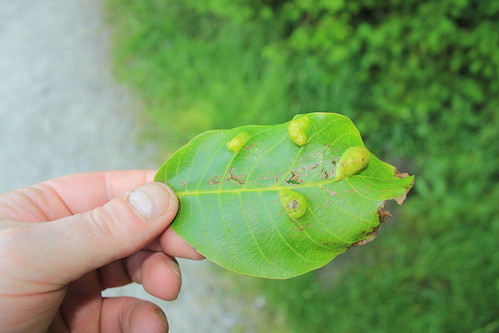
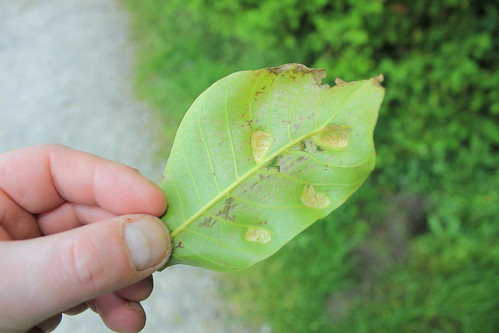
Walnut Tree Juglans regia and Walnut Leaf Gall Mite - Aceria erinea


Walnut Juglans regia


Walnut is a deciduous broadleaf tree native to south-east Europe to south-west China.

The walnut's botanical name, Juglans, originates in Roman mythology. According myth, Jupiter, who was also known as Jove, lived on walnuts when he lived on earth. Therefore Romans called walnuts Jovis glans, meaning 'the glans of Jupiter.' The botanical name of the English walnut, Juglans regia, means the 'royal nut of Jupiter'.

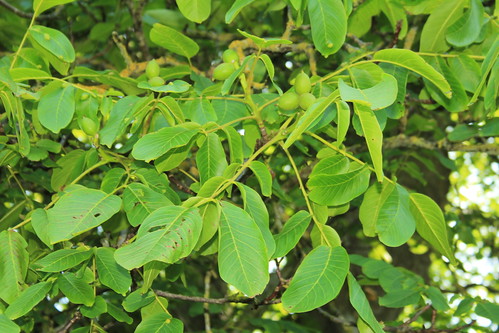
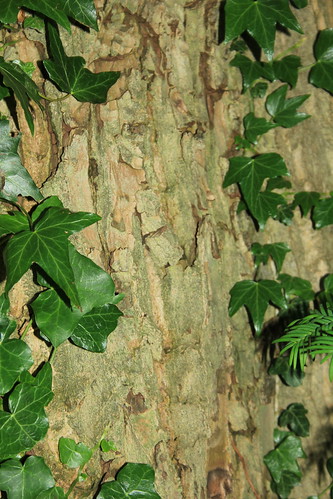
Description to 35m. They typically have a short trunk and broad crown, though can be narrower if grown in a woodland situation. The bark is smooth and olive-brown when young, developing fissures and fading to silver-grey with age. Twigs are stout, green and curving.

Leaves: shiny and pinnate (feather-like), with 5-9 paired oval leaflets and one 'terminal' leaflet at the end.

Flowers: male flowers are drooping yellow-green catkins 5–10 cm long, and the female flowers appear in clusters of 2-5.

Fruits: pollinated by wind, female flowers develop into a fruit with a green, fleshy husk and a brown, wrinkled walnut.


Aceria erinea is a mite that causes galls to form on the leaves of Walnut. Large yellowish blisters appear on the upper surface of the leaves with corresponding hollows on the underside which are lined with whitish or pale brown hairs among which the mites live and feed


Tuesday, 20 June 2017

Garden Moths 17th June 2017


Weather - Warm 18o Light Breeze. Low Humidity ,

General Comments Lots of Small Magpies , and Peppered Moths which seemed to be local to the Pebble Dashing nearby and on shed . A flurry of Large Yellow Clunbsy things have also returned

Other Entomology  Birch Shieldbug

MV 120 W Robinson

73.317 BF2089    Heart & Dart Agrotis exclamationis
73.162 BF2321    Dark Arches Apamea monoglypha
73.176 BF2340    Middle-barred Minor Oligia fasciuncula
49.039 BF 998     Light Brown Apple Moth Epiphyas postvittana x12
63.025 BF1376    Small Magpie Anania hortulata  x4
73.173 BF2337    Marbled Minor Agg  Oligia strigilis
70.226 BF1906    Brimstone Moth Opisthograptis luteolata
70.252 BF1931    Peppered Moth Biston betularia  x3
70.061 BF1738    Common Carpet Epirrhoe alternata
63.018 BF1378    Elder Pearl Anania coronata
62.001 BF1428    Bee Moth Aphomia sociella 
73.329 BF2102    Flame Shoulder Ochropleura plecta x2
49.156 BF1083    Marbled Orchard Tortrix Hedya nubiferana
72.003 BF2477    The Snout Hypena proboscidalis
70.097 BF1764    Common Marbled Carpet Dysstroma truncata
73.113 BF2306    Angle Shades Phlogophora meticulosa
73.342 BF2107   Large Yellow Underwing Noctua pronuba
Pugs


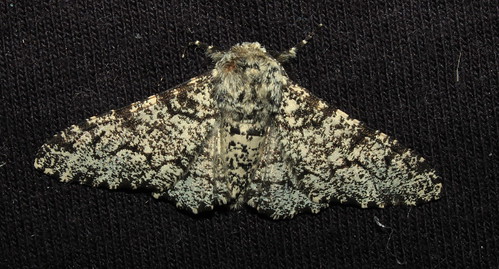
70.252 BF1931    Peppered Moth Biston betularia
IMG_0279xx

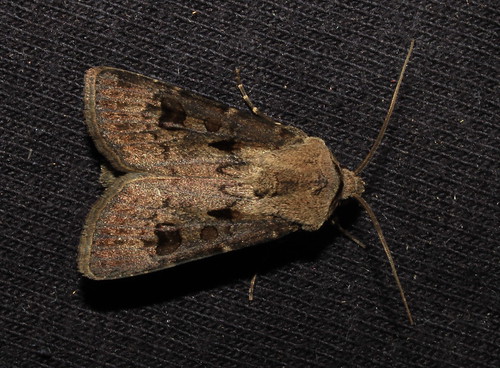
73.317 BF2089    Heart & Dart Agrotis exclamationis

IMG_0261xx


73.342 BF2107   Large Yellow Underwing Noctua pronuba
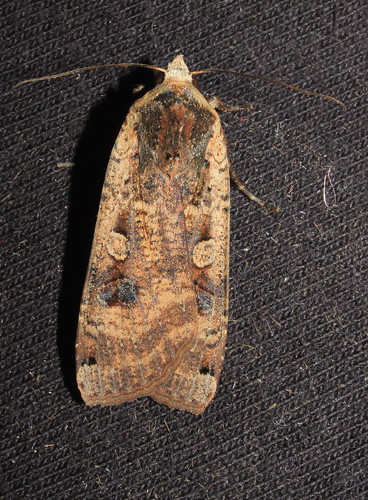

IMG_0253xx

IMG_0258xx


73.162 BF2321     Dark Arches Apamea monoglypha
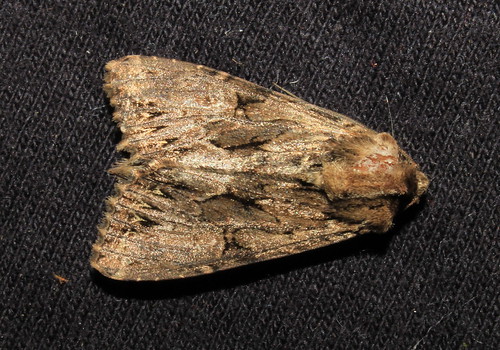

IMG_0303xx


73.176 BF2340    Middle-barred Minor Oligia fasciuncula
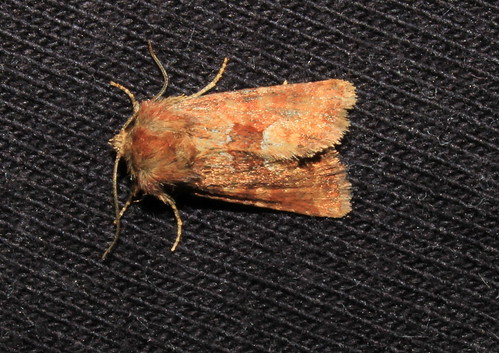

IMG_0326xx


1428 Bee Moth Aphomia sociella ABH 62.001  Female
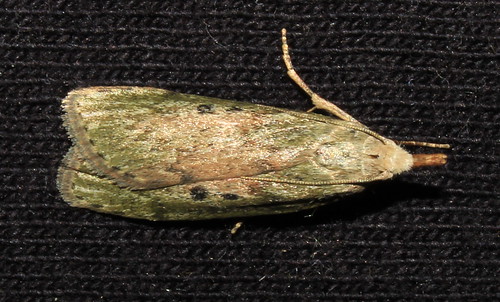

IMG_0361xx

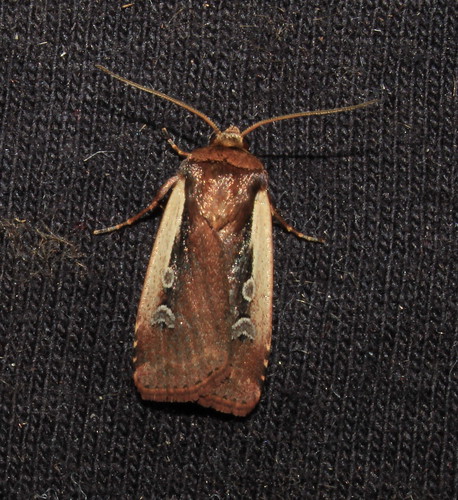
73.329 BF2102    Flame Shoulder Ochropleura plecta

IMG_0338xx
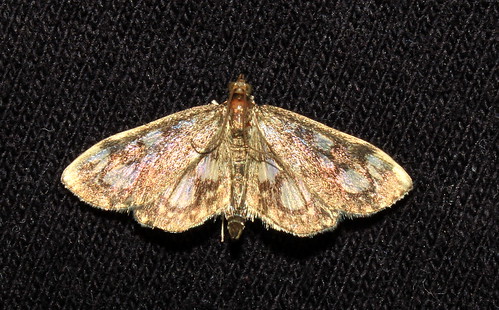
63.018 BF1378    Elder Pearl Anania coronata

IMG_0185xx

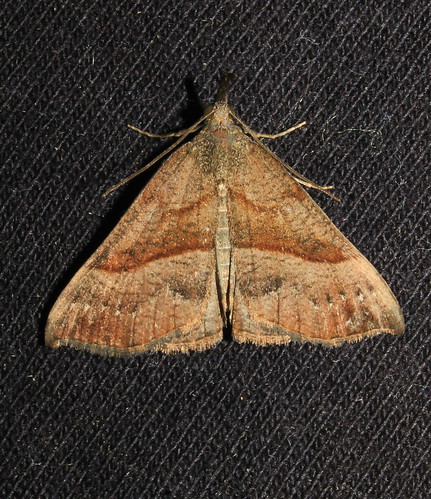
72.003 BF2477    The Snout Hypena proboscidalis
IMG_0219xx

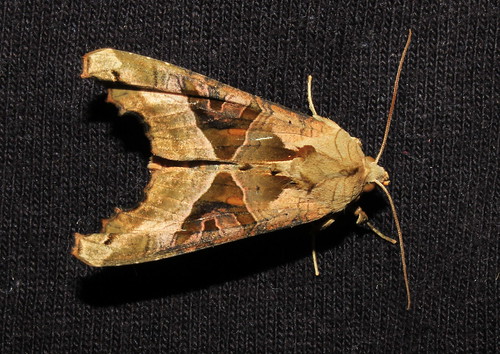
73.113 BF2306    Angle Shades Phlogophora meticulosa

IMG_0206xx

IMG_0208xx

Pug  For Confirmation - ?????

IMG_0397xx

Comments


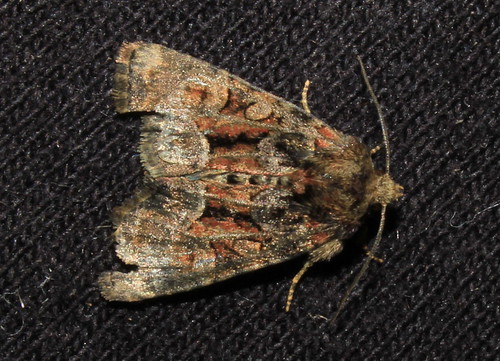
73.175 BF2338 Rufous Minor Oligia versicolor

One of potentially 3 similars requiring Gen Det but based on superficial looks possibly a Rufous Minor NOTE Not an absolute ID for the reasons above
IMG_0298xx

Saturday, 3 June 2017

Garden Moths 24th May 2017

Garden Moths  24th May 2017

Weather Warm, circa 17o , Still, MV 120

VC 63 West Yorkshire

71.012 BF2000  Iron Prominent Notodonta dromedarius
70.226 BF1906  Brimstone Moth Opisthograptis luteolata
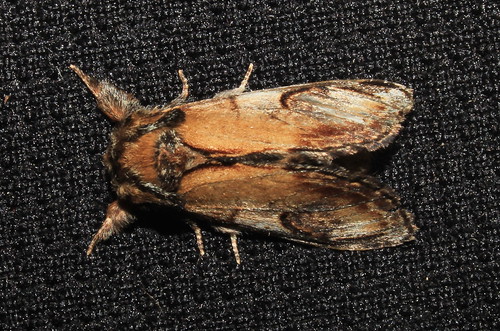
71.013 BF2003  Pebble Prominent Notodonta ziczac
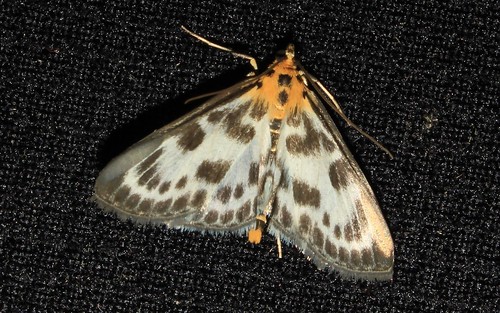
63.025 BF1376  Small Magpie Anania hortulata
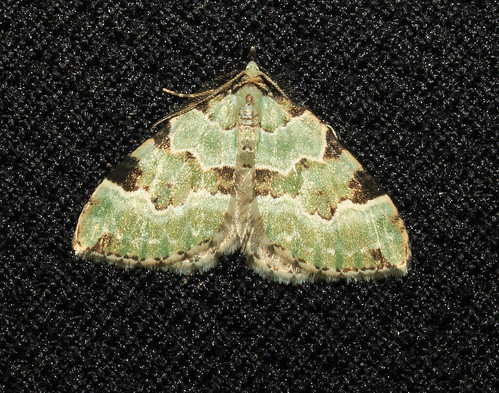
70.100 BF1776  Green Carpet Colostygia pectinataria
70.061 BF1738  Common Carpet Epirrhoe alternata
70.097 BF1764  Common Marbled Carpet Dysstroma truncata
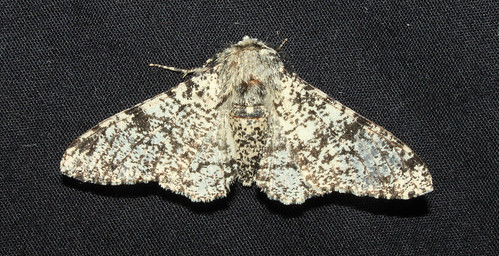
70.252 BF1931  Peppered Moth Biston betularia
62.001 BF1428  Bee Moth Aphomia sociella


70.061 BF1738  Common Carpet Epirrhoe alternata

IMG_9564xx

71.012 BF2000  Iron Prominent Notodonta dromedarius


70.100 BF1776 Green Carpet Colostygia pectinataria

IMG_9580XX
63.025 BF1376  Small Magpie Anania hortulata

IMG_9534XX

70.252 BF1931  Peppered Moth Biston betularia

IMG_9415XX_1

71.013 BF2003  Pebble Prominent Notodonta ziczac


IMG_9474XX


70.226 BF1906  Brimstone Moth Opisthograptis luteolata

IMG_9442XX

62.001 BF1428  Bee Moth Aphomia sociella

IMG_9646xx

+ ID
+ ID

MORE TO FOLLOW

Saturday, 25 March 2017

Bag Worms

Bagworms

The Psychidae (bagworm moths, also simply bagworms or bagmoths) are a family of the Lepidoptera (butterflies and moths) which are much overlooked

"Bags" resemble caddisfly cases in their outward appearance – a mass of (mainly) plant detritus spun together with silk on the inside.. The case is based on a silk tube, to which the larva attaches various bits of plant, matter such as lichens, algae, sand, insects and debris. Like Caddis Psychidae larvae construct cases that can be identifiable through combinations of shape, size and material , this is not always reliable due to similar constructions in other species so rearing is recommended

In the larval stage, bagworms extend their head and thorax from their mobile case to devour the leaves of host plants, often leading to the death of their hosts

Bagworm caterpillars make distinctive 1.5 to 2 inch long spindle-shaped bags that can be seen hanging from twigs of a variety of trees and shrubs. Sometimes the bags are mistaken for pine cones or other plant structures. 

Adult females of many bagworm species have only vestigial wings, legs, and mouthparts. In some species, parthenogenesis is known. The adult males of most species are strong fliers with well-developed wings and feathery antennae but survive only long enough to reproduce due to underdeveloped mouthparts that prevent them from feeding. Their wings have few of the scales characteristic of most moths, instead having a thin covering of hairs.
Some Bagworm Species


11.006 ... B&F 0181 Taleporia tubulosa (Retzius, 1783)

11.005 ... B&F 0179 Dahlica lichenella .. Lichen Case-bearer (Linnaeus, 1761) (Recorded VC63 )

11.004 ... B&F 0177 Dahlica inconspicuella .. Lesser Lichen Case-bearer (Stainton, 1849)

11.009 ... B&F 0184 Luffia ferchaultella (Stephens, 185

11.012 ... B&F 0186 Psyche casta (Pallas, 1767)

11.002 B&F 0175) Narycia duplicella

11.001 B&F 0180) Diplodoma laichartingella (Recorded VC63 )

11.003 B&F 0176) Dahlica triquetrell


11.001 B&F 0180) Diplodoma laichartingella


The larva builds a case, covered with small fragments of plant matter and other particles, and feeds on lichens, decaying plant matter and detritus. The larval period usually lasts for two years.During the Winter months, cases can be found tucked well into the characteristic hollows around the roots of mature Beech trees, the larvae becoming active from late March and early April, moving back up the tree trunks to begin feeding.

11.009 ... B&F 0184 Luffia ferchaultella (Stephens, 185


Chris Manley (in his `British Moths`, 2nd Edition 2015) states that it can be `abundant on tree trunks in damp woods` and other sources mention old fence posts (or other wooden objects) or old walls where powdery grey lichens grow. The latter can be locally frequent, even in urban areas. Luffia is said to prefer `shady places` rather than tree trunks and walls etc in full sun.March/early April) is said to be the best time to find the distinctive larval cases. as cases are, by then, full sized (up to 6mm) and easier to spot.

Tuesday, 14 March 2017

Common Footman Eilema lurideola ABH 72.045 BF2050

These small caterpillars 0.8 mm - 1.2 mm where found at the base of a lichen covered wall .

Its likely this is the Caterpilar of the Common Footman

72.045 BF2050    Common Footman Eilema lurideola


Sunday, 5 March 2017

Quote of The week 14

He is richest who is content with the least, for content is the wealth of nature.

Socrates